wordle unlimited
Wordle (NYT): The Simple Puzzle That Became a Cultural Phenomenon
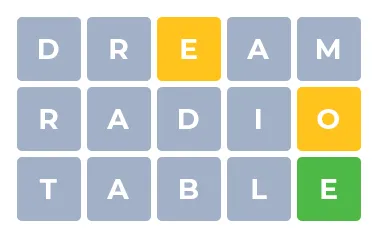
Wordle, acquired by The New York Times and often referred to as the Nyt Wordle, is a minimalist daily word puzzle that challenges players to guess a five-letter target word in six tries. Its straightforward rules—type a guess, receive feedback via color-coded tiles (green for correct letter and position, yellow for correct letter wrong position, gray for incorrect)—belie a depth that has propelled it into mainstream culture.
The biggest strength of drive mad is its creativity. Every stage introduces another unexpected idea instead of repeating old challenges. The learning curve feels natural because players improve through experience rather than upgrades. Success comes from better control and smarter decisions. Short levels also make it easy to play for only a few minutes or continue for much longer. Drive Mad proves that clever level design and satisfying physics can create endless replay value without complicated systems.
What makes Wordle work?
Simplicity: The interface and rules are immediately comprehensible, lowering the barrier to entry. No registration was required initially, making play frictionless.
Scarcity and shared experience: One puzzle per day creates a shared, time-bound experience that fosters anticipation and conversation. The shareable results grid (using emojis to avoid spoilers) turned success into a social ritual.
Skill vs. luck balance: Wordle rewards vocabulary, pattern recognition, and deductive reasoning, yet the fixed solution list and daily cadence temper the role of sheer luck.
Cultural and social impact
Wordle rapidly became a social media staple. Players posted their result grids across platforms, comparing streaks and celebrating rare "absurdle" wins. It influenced language play, inspired spin-offs (e.g., Quordle, Dordle, and themed variants), and generated memes and parodies.
The New York Times’ acquisition in 2022 signaled mainstream recognition and created a pathway for integrating puzzles into a broader subscriber ecosystem. For many, Wordle introduced or reintroduced interest in word games and daily puzzle habits.
Benefits and cognitive implications
Puzzles like Wordle engage working memory, vocabulary retrieval, and pattern-formation skills. Cognitive research on word and logic puzzles suggests benefits for attention, problem-solving, and mental agility—especially when part of a routine. The social sharing element can also boost motivation and reinforce a sense of community.
Criticisms and counterarguments
Commercialization and accessibility: After NYT’s acquisition, some voiced concerns about the puzzle being behind a paywall or becoming part of a subscription model. While Wordle itself remained free initially, the incident triggered broader debates about ownership of communal digital goods.